Blog

Lessons from the build.

Honest notes on what starting, growing, and closing businesses has taught me, from margins and tough decisions to the tools changing how I sell.

01 · Junior Distribution Revenue isn't profit 4 min read 02 · Tipsy Towers Knowing when to walk away 4 min read 03 · Sales and AI Smarter prospecting with AI 4 min read

01

Junior Distribution

Revenue isn't profit: what Junior Distribution taught me about margins
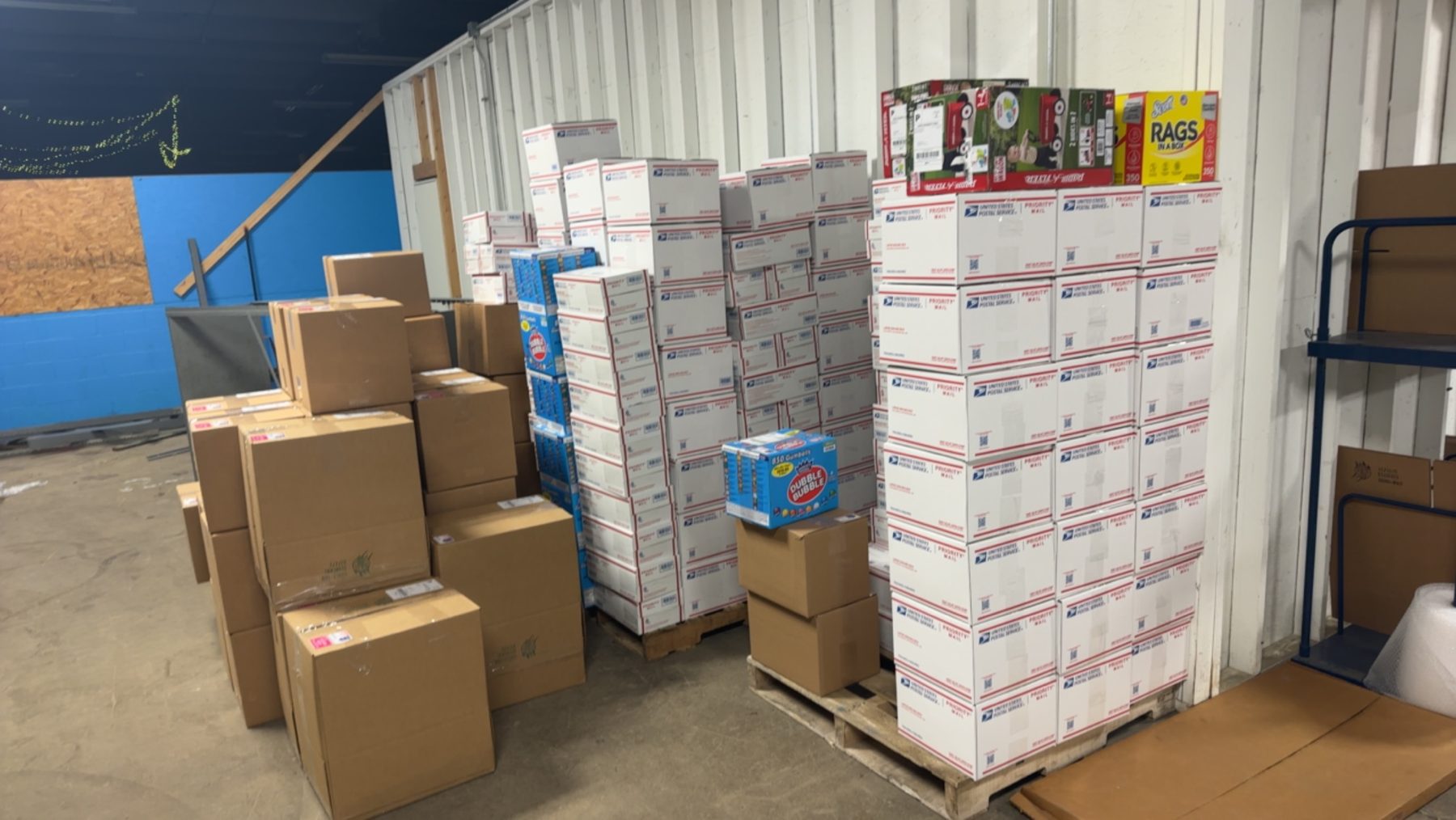
Pallets of boxed products in the Junior Distribution warehouse

When I started Junior Distribution, I thought I had found the perfect business. The idea was simple: buy products in bulk at wholesale prices, send them to Amazon, and let one of the largest marketplaces in the world do the selling. There was no product to invent, no factory to build, and no brand to create from scratch. If the numbers worked on one product, I figured, they would work on a hundred.

For a while, it looked like I was right. We distributed more than ten thousand products to customers across the United States, Mexico, and Canada. We built a logistics and supply chain network that let us move inventory quickly, and our sales numbers looked great. From the outside, Junior Distribution looked like a success story. From the inside, I was starting to see a problem.

The number that actually matters

Sales are the most visible number in any business, and that's exactly what makes them dangerous. A big sales figure feels like proof that you're winning. But sales only tell you how much money came in. They don't tell you how much was left over after you paid for the product, the shipping, the storage, the marketplace fees, and the hundred small costs that show up along the way.

In wholesale, those costs are relentless. Every product we sold came with a purchase price, freight to get it into Amazon's warehouses, Amazon's referral and fulfillment fees, storage charges, and the occasional return or damaged unit. Competition was intense, too. When several sellers offer the same product, prices drift down toward the lowest margin anyone will accept. On many products, what we kept was only a small slice of each sale.

A thin margin can still work if you have enough volume and very low overhead. For us, overhead was the catch. We were running almost everything ourselves, and as the business grew, we needed help: someone to manage inventory, handle shipments, and source new products. When I sat down and did the math, the profit left over from all those sales was not enough to pay an employee a fair wage. The business could grow its revenue, but it couldn't grow its team.

Making the call

At the same time, I was getting ready to leave for college. That made the decision clearer. A business that depends entirely on its founders' time, and can't afford to hire anyone else, isn't really a business that can scale. It's a job with a lot of inventory attached. I decided to shut Junior Distribution down rather than keep pouring time into something whose economics didn't add up.

It wasn't an easy call. Walking away from something that looks successful on paper feels wrong. But I'm convinced it was the right decision, and it taught me more than any class I had taken up to that point.

What I do differently now

The biggest lesson is that I look at unit economics before I look at anything else. Before I get excited about how much something could sell, I want to know how much each sale actually earns after every cost is counted, and whether that number is big enough to support a real team.

That lesson is a big reason I chose to minor in Accounting alongside my Entrepreneurship major. Classes like Managerial Accounting gave me the vocabulary and the tools for what I had learned the hard way: contribution margins, fixed versus variable costs, and break-even analysis. Now I can model a business before I build it, instead of discovering the problems after.

It also shapes my work today. At Harman Corp, part of my job is analyzing customer revenue and purchasing patterns to understand the long-term value of new accounts, not just the size of the first order. And at Artemin AI, the entire product is built around helping manufacturers lower what they pay for components, which is another way of saying we help them protect their margins.

Junior Distribution didn't end because people didn't want what we sold. It ended because the business didn't keep enough of each sale. I'll never make that mistake again, and every business I build from here starts with the numbers.

02

Tipsy Towers

Knowing when to walk away: lessons from closing Tipsy Towers

Rows of open cartons filled with Tipsy Towers games on inventory day

Most entrepreneurship stories are about starting things. Far fewer are about ending them. But some of the most important decisions I've made as a founder were about when to stop, and none taught me more than closing Tipsy Towers.

My co-founder and I started Tipsy Towers in college. It was a party drinking game designed to be easy to learn and fun for a group of friends. Building it meant learning about product design, packaging, inventory, and distribution all at once, and figuring most of it out as we went.

The response was better than we expected. We got the game stocked in more than 100 fulfillment centers across the country, which meant customers almost anywhere could get it quickly. For a product we had built from scratch as students, that was a huge milestone. I still remember inventory day, when cases of games covered the floor and the whole thing finally felt real.

The problem we didn't see coming

Then a copyright dispute came up. I won't go into the details here, but it put the future of the product in question. Suddenly we weren't thinking about marketing or new customers anymore. We were thinking about legal costs, timelines, and risk.

Our first instinct was to fight. We had worked hard on Tipsy Towers, and walking away felt like giving up. But emotion is a bad way to make a business decision, so we did what we should always do: we ran the numbers.

Running the numbers

We looked at what it would realistically cost to contest the claim, including legal fees, the time it would take, and the sales we would lose while the product's future was uncertain. Then we compared that with what the business could realistically earn if things went our way. Laid out side by side, the answer was clear. Even in a good outcome, fighting would cost more than the business was likely to return. The financially responsible decision was to close Tipsy Towers on our own terms.

That's a hard thing to do. Nobody starts a company hoping to shut it down. But I've come to believe that knowing when to stop is a real skill, and an underrated one. Founders often keep going because they've already put so much in. Economists call this the sunk cost fallacy: letting past investment drive future decisions. The money and time we had already spent were gone either way. The only question that mattered was whether the next dollar and the next hour would be worth it.

What I took away

The first lesson is practical: protect your intellectual property from the very beginning. Trademark searches, clear ownership of designs, and a basic understanding of copyright aren't exciting, but they are far cheaper than dealing with a dispute after a product is already on shelves. On every venture since, IP is part of my day-one checklist, not an afterthought.

The second lesson is about decision-making. Closing Tipsy Towers taught me to separate how I feel about a business from what the business is actually worth. That applies far beyond startups. In sales at Harman Corp, I'm constantly deciding which opportunities to pursue and which to let go, and the same discipline holds: look at the realistic cost and the realistic return, then decide.

The third lesson is that ending something isn't the same as failing. We built a real product, got it into more than 100 fulfillment centers, and learned how packaging, inventory, and distribution work at scale. All of that came with me into the next venture. Tipsy Towers closed, but the experience didn't.

Today, when I think about a new idea, I ask a few extra questions up front. What could go wrong that would be expensive to fix later? Who owns each piece of what we're building? And at what point would the numbers tell us to stop? Having those answers early makes it much easier to make a clear-headed decision when things get hard.

Dream big, take risks, and have fun. But when the numbers tell you it's time to walk away, listen.

03

Sales and AI

Smarter prospecting: how I'm using AI to find new customers

In business development, the hardest part of selling usually isn't the pitch. It's figuring out who to pitch in the first place. At Harman Corp, a manufacturer of protective caps, plugs, grips, and molded plastic components, that question sits at the center of my job, and it's where I've become most interested in what AI can do.

Finding the needle

Harman's products end up on countless finished goods: furniture, equipment, tubing, machinery, and much more. That's a huge opportunity, but it's also a challenge. The companies that could use our components don't announce it. A manufacturer of fitness equipment or office furniture might already be buying caps and plugs from another supplier, and the only way to know is to look closely at what they make.

So that's what I do. I research industries, study product catalogs and photographs, and look for the specific places where a Harman part already fits, like the end of a tube, the bottom of a leg, or a handle that needs a grip. When I reach out, I'm not sending a generic sales email. I'm showing a prospect that I understand their product, and pointing to a specific component where we could improve their pricing, quality, or supply.

That approach works. It's the foundation of a sales program that has produced more than $800,000 in repeat business for Harman. But it's also slow. Reviewing catalogs one page at a time doesn't scale easily, and that's where AI comes in.

Where AI helps

I've been exploring AI-assisted tools to speed up the research side of prospecting. AI is good at the repetitive first pass: scanning large amounts of product information, summarizing what a company makes, and flagging products that are likely to use the kinds of components we supply. Instead of starting from a blank page, I can start from a shortlist.

AI also helps with organization. Keeping track of industries, prospects, product applications, and where each conversation stands is a lot of information. Using AI to structure research notes and draft first versions of outreach lets me spend more of my time on the part that matters most: understanding the customer and building the relationship.

Where it doesn't

As useful as these tools are, I've learned not to trust them blindly. AI can misidentify a part, misread a product photo, or confidently state something that isn't true. Every opportunity still needs a human check before it goes in front of a customer. Sending a prospect a recommendation based on a wrong assumption is worse than not reaching out at all.

More importantly, AI doesn't build trust. Customers switch suppliers because they believe you understand their needs and will deliver. That comes from samples, specifications, honest quotes, follow-up, and showing up consistently. AI can help me find the right door to knock on, but I still have to be the one who knocks.

In practice, my process now combines both. AI helps me cast a wider net and narrow it down faster. Then I do the detailed work myself: confirming that the product really uses a part we make, understanding what the customer cares about most, whether that's price, quality, or reliable supply, and writing outreach that speaks directly to it. The result is fewer wasted emails and more conversations that actually go somewhere.

Why this matters to me

Working where manufacturing and AI meet is a big part of why I co-founded Artemin AI, which is building software to help manufacturers source components and reduce what they pay for them. My experience in sales showed me how much time goes into finding the right parts, the right suppliers, and the right price, and how much value is hidden in that process.

I believe the future of sales and sourcing belongs to people who can combine strong relationships with smart tools. AI won't replace good salespeople, but salespeople who use AI well will have a real edge. I want to be one of them, and I want to build tools that help others do the same.